Cibo Keynote Template: A Strategic Tool for Clearer Communication and Consistent Branding
Presentations are often the bridge between an idea and a decision. Whether you are pitching to investors, training a team, or presenting quarterly results to stakeholders, the quality of your slides can either reinforce your message or undermine it. The visuals you choose carry weight. They shape perception, signal professionalism, and influence how your content is received. The Cibo Keynote Template offers a structured approach to building presentations that serve these strategic goals without forcing you to start from scratch each time. It is not just a set of attractive slides. It is a system designed to help you communicate with clarity, maintain visual consistency, and adapt your message to different contexts while saving time and mental energy.
What the Cibo Keynote Template Offers and Why It Matters
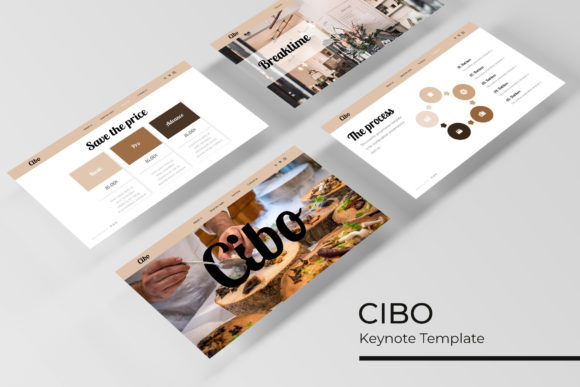
At its core, the Cibo Keynote Template is a comprehensive presentation package built for Apple Keynote. It includes 150 total slides organized across five distinct color variations, each containing 30 slides. This structure gives you a complete visual language for a wide range of use cases without locking you into a single aesthetic. The five premade color options allow you to choose a palette that aligns with your brand identity, campaign theme, or audience expectations. This flexibility is valuable because the same content can be presented in different tones depending on the setting. A boardroom presentation may call for darker, more reserved colors, while a creative workshop might benefit from lighter, more vibrant tones.
Beyond the slide count, the template includes handcrafted infographics, section break slides, and dedicated gallery and portfolio slides. These are not afterthoughts. They are deliberate components that help you structure your narrative logically and visually. Infographics allow you to present data in a way that is immediately digestible. Section breaks give your audience a moment to transition between topics, improving retention. Gallery and portfolio slides are essential for showcasing work, case studies, or proof of concept, especially for freelancers, agencies, and service-based businesses. When you use these elements intentionally, your presentation becomes more than a sequence of slides. It becomes a guided experience.
Strategic Advantages of Using a Structured Template System
One of the most overlooked aspects of presentation design is consistency. When each slide looks like it belongs to a different presentation, your message loses authority. Audiences subconsciously register visual inconsistency as a lack of preparation or professionalism. The Cibo Keynote Template addresses this by being based on master slides. Master slides ensure that every element you add adheres to the same typography, spacing, color scheme, and layout rules. This does not mean your slides will look identical. It means they will look like parts of a coherent whole. For entrepreneurs and small business owners who do not have a dedicated design team, this is a practical way to maintain brand standards without hiring outside help.
The resizable and editable graphics further support this consistency. You can adjust diagrams, icons, and illustrations to fit your content without losing visual quality. The picture placeholders use a drag-and-drop system, which reduces the time spent aligning images and cropping them to fit. When you are working under a tight deadline, these small efficiencies add up. You spend less time fiddling with layout and more time refining your message.
Another strategic advantage is the inclusion of pixel-perfect illustrations. In many templates, illustrations look good at first glance but break down when resized or printed. Pixel-perfect assets maintain their sharpness across devices and formats. This matters if you are presenting on a large screen, sharing slides as PDFs, or printing handouts. It also matters for credibility. A blurry or pixelated graphic can make even the most accurate data seem unreliable.
How to Use the Cibo Keynote Template for Different Goals and Audiences
The way you approach the template should depend on your specific objectives. If your goal is to pitch a product or service, you might lean heavily on the portfolio and gallery slides. These allow you to present case studies, testimonials, or before-and-after examples in a visually compelling way. Instead of listing features, you show results. This approach aligns with how decision-makers process information. They want to see evidence, not claims. By using the portfolio slides strategically, you can build trust without saying a word about trustworthiness.
If your goal is internal communication, such as a team alignment meeting or a training session, the section break slides and infographics become more important. Section breaks help you organize your agenda so that participants can follow along without confusion. Infographics help you explain workflows, timelines, or data trends without overwhelming your audience with text. For educators and trainers, this structure supports learning by breaking content into manageable chunks. For operations managers, it provides a clear way to present process improvements or project updates.
For marketers and creators who need to present campaign strategies or content calendars, the five color variations offer a creative advantage. You can use one color set for the strategy section, another for the creative concept, and another for the metrics and results. This visual shift signals a change in topic and keeps the audience engaged. It also allows you to align the presentation with seasonal campaigns or brand updates without redesigning everything from scratch.
Freelancers and consultants can use the template to create a consistent client-facing experience. When you meet with multiple clients in the same week, it is easy for presentations to become disjointed. Using a template like Cibo ensures that every client receives the same level of visual polish, regardless of how much time you had to prepare. This reinforces your personal brand and makes you look organized, even when you are working under pressure.
Practical Considerations Before Building Your Presentation
Even the best template will not save a poorly planned presentation. Before you open the Cibo Keynote Template, take time to clarify your message. What is the single most important thing your audience needs to take away? What action do you want them to take after seeing your slides? These questions should guide every decision you make about what content to include and which slides to use.
Once you have a clear narrative, review the five color variations and choose the one that best matches your context. Consider your audience's expectations. A financial services firm may respond better to muted, professional tones, while a creative agency may appreciate bolder colors. You can always customize further, but starting with a palette that fits the room gives you a head start.
Take advantage of the drag-and-drop picture placeholders by preparing your images in advance. Crop and resize them to avoid distortion. Use high-resolution images that match the tone of your presentation. The placeholder system is designed to save time, but it still requires intentional input. A well-chosen image can elevate your message. A poorly chosen one can distract or confuse.
The handcrafted infographics are another area where intentionality matters. Do not add an infographic just because it looks good. Only use it if it helps your audience understand something more clearly. If a simple bullet list works, use that. The best presentations use visual elements to aid understanding, not to decorate empty space. The same principle applies to the gallery and portfolio slides. Only showcase work that directly supports your narrative. If a project does not add value to the story you are telling, leave it out.
What Comes with the Cibo Keynote Template and How to Get Started
The package includes five KEY files, each in widescreen format, corresponding to the five premade color variations. You also receive a Readme First file that explains how to use the template and where to find the fonts. The fonts used are free fonts, and a download link is included. This is important because using the correct fonts ensures that your presentation displays as intended across different devices. If you open the template on a device that does not have the fonts installed, Keynote will substitute them, potentially breaking your layout. Installing the fonts ahead of time prevents this issue.
The preview images shown in the product listing are for illustration purposes only. They are not included in the download. This is standard for template products, but it is worth noting so you do not expect to receive the demo images. The template comes with placeholders that you fill with your own content. This is actually an advantage. It forces you to customize the presentation to your specific needs rather than using generic stock images that may not fit your brand.
Risks of Using the Template Without Clear Goals
While the Cibo Keynote Template is designed to save time and improve quality, it can be misused if approached without strategy. One common mistake is using too many slide types in a single presentation, creating a disjointed experience. Just because the template includes section break slides does not mean you need one after every third slide. Use them sparingly to signal major transitions. Another risk is relying entirely on the visual structure without investing in the content. A beautiful presentation with weak arguments will still fail. The template is a tool for delivering your message, not a substitute for having one.
There is also the risk of visual fatigue. If every presentation you deliver uses the same color variation and layout, your audience may become less engaged. To avoid this, rotate between color variations depending on the context. Use the flexibility built into the template to keep your presentations fresh. The five color sets are there to give you options. Use them.
Finally, do assume that the template works perfectly out of the box for every screen size. While the widescreen format is standard, test your presentation on the actual device you will use. Check that text is readable, images are sharp, and animations behave as expected. A quick test can prevent technical issues that distract from your message.
Long-Term Value and Decision-Making Guidance
Investing in a structured template like Cibo is not just about the next presentation. It is about building a system that makes you more efficient over time. Once you become familiar with the template, you will spend less time on each future presentation. You will develop a mental library of which slides work best for which situations. This is especially valuable for professionals who present frequently. The template becomes a framework you can rely on, freeing up mental energy for higher-level thinking.
When deciding whether this template fits your needs, consider your typical presentation volume and the diversity of your audiences. If you present rarely and each presentation is unique, a template may still be useful for maintaining brand consistency, but you might not need all 150 slides. If you present regularly to different groups, the variety in the template becomes a significant advantage. You can tailor each presentation without reinventing the visual design every time.
For decision-makers evaluating template options, the key criteria should be flexibility, consistency, and ease of use. The Cibo Keynote Template scores well on all three. It gives you enough structure to stay organized and enough freedom to adapt. It is not a rigid system that forces you into one format. It is a toolkit that supports intentional design choices. When used thoughtfully, it can help you communicate more clearly, build trust with your audience, and achieve better outcomes from your presentations.
Ultimately, the value of any presentation tool is determined by how well it helps you achieve your goals. The Cibo Keynote Template is a practical, well-designed option for professionals who want to save time without sacrificing quality. By approaching it strategically, you can turn a good template into a reliable part of your communication workflow.