Biscacha Social Media Template: A Practical Path to Consistent Branding Without the Premium Price Tag
Every scroll through Instagram, LinkedIn, or Facebook reveals a clear divide: accounts with polished, cohesive visuals stand out, while those without them blend into the noise. For professionals, creators, and business owners, a strong social media presence is no longer optional—it is a core part of how trust is built, audiences are engaged, and products are discovered. Yet the tools to achieve that level of polish often come with a steep learning curve or a high price tag. This is where the Biscacha Social Media Template enters the conversation. Designed for Adobe Illustrator, this multipurpose Instagram template offers a customizable foundation for anyone looking to elevate their account appearance without paying for expensive design services. But what makes it relevant today, and how does it fit into the evolving landscape of content creation?
Why Social Media Templates Have Become Essential Tools
The demand for consistent, professional-looking social media content has grown steadily over the past several years. Audiences have become visually sophisticated. They expect a certain level of quality from the accounts they follow, whether those belong to a local bakery, a freelance graphic designer, or a corporate brand. At the same time, the volume of content required to stay visible has increased. Posting once a week is rarely enough to maintain engagement. The result is a need for efficiency: creators and businesses must produce high-quality visuals repeatedly, week after week.
Templates address this need directly. Instead of starting from scratch with every post, you work from a pre-built layout that already reflects a cohesive aesthetic. The Biscacha Social Media Template takes this concept further by offering a fully vector-based, resizable design that works across different content formats—Instagram posts, Stories, banners, advertisements, and more. This flexibility matters because modern social media strategies rarely rely on a single type of content. A single template that can be adapted for multiple purposes saves time and ensures visual consistency across your entire feed.
Another factor driving interest in templates is the shift toward independent content creation. Many small business owners, freelancers, and solopreneurs now manage their own marketing. Hiring a designer or agency is not always feasible, especially in the early stages. Templates bridge that gap. They provide a professional starting point that only requires basic skills to customize. The Biscacha template is specifically built for Adobe Illustrator, a program that many creators already have some familiarity with. By lowering the barrier to entry, templates like this one empower users to take control of their visual identity.
How Content Creation Habits Are Changing
Social media platforms continue to evolve, but one trend has remained consistent: the value of visual storytelling. Instagram, in particular, has moved beyond simple photo sharing. It is now a search engine, a marketplace, and a portfolio platform rolled into one. Users judge a profile within seconds. If the first few posts look disjointed or amateurish, they move on. This reality has pushed even casual users to think more strategically about their feed's appearance.
The rise of the creator economy has also changed expectations. More people now generate income directly from their social media presence, whether through brand partnerships, product sales, or subscription models. For these creators, every post is a business asset. The visual quality of that asset matters. A well-designed Instagram post can increase engagement, build authority, and communicate professionalism.
At the same time, the tools available for content creation have become more accessible. Adobe Illustrator remains an industry standard, but it is no longer reserved for professional designers. Many entrepreneurs, educators, and marketers have learned just enough Illustrator to edit templates, adjust text, and swap images. The Biscacha Social Media Template is designed with this user in mind. The step-by-step workflow—open the EPS file in Illustrator, copy a preferred design, create a new file at your desired pixel size, paste, place your image, crop it, send it to the back, make edits, and export as JPEG—is straightforward enough for someone with basic Illustrator knowledge to execute successfully.
Practical Implications for Different Users
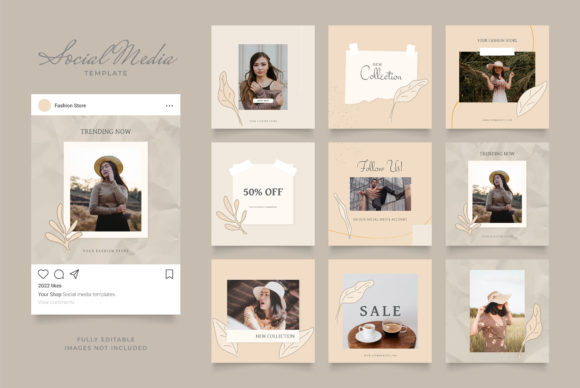
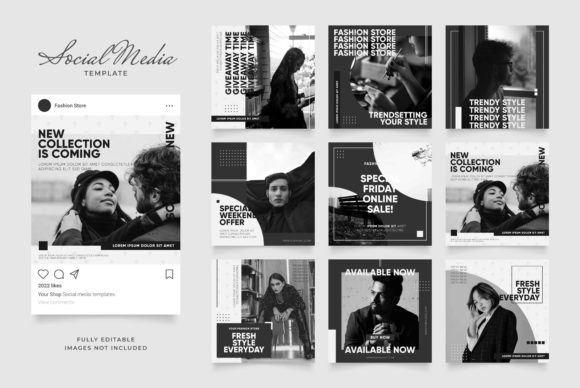
The Biscacha template is not a one-size-fits-all solution in the sense of a single layout. It is a multipurpose template that includes multiple design variations. This is an important distinction. A single template with multiple options allows you to maintain a cohesive look while still having variety. For a blogger, this might mean using one layout for quote cards, another for promotional images, and a third for behind-the-scenes content. For a small business owner, the same template can serve as a product showcase, a banner advertisement, and a standard post. The consistency comes from shared design elements—fonts, color placements, and structural proportions—while the variety keeps the feed visually interesting.
For marketers and social media managers, the ability to customize the template without losing quality is a significant advantage. Vector files remain sharp at any size. You can create a square Instagram post, a vertical Story, or a wide banner for a website header from the same base file. This resizability means you are not locked into a single format. It also means the template can grow with your needs. As your content strategy expands, you can repurpose the same design for new platforms or ad placements.
Educators and coaches who use social media to share insights can benefit from the template's clean layout. When you are posting educational content, readability matters. The template's structure helps ensure that text is presented clearly, images are framed consistently, and the overall look remains professional. This builds recognition over time. Followers begin to associate that visual style with your content, which strengthens your brand identity.
Freelancers and creative professionals often face a paradox: they need a polished social media presence to attract clients, but they are too busy working on client projects to design their own posts. A template removes that friction. It provides a ready-made foundation that can be customized in minutes. Instead of spending hours on layout decisions, you focus on choosing the right image and writing a compelling caption.
Hobbyists and curious readers who use social media for personal expression also have a place here. You do not need to be running a business to want a beautiful feed. Many people take pride in their Instagram presence as a form of creative outlet. The Biscacha template gives them the same professional tools that businesses use, without requiring design training or a large budget.
Understanding the Tool Requirements
It is worth noting that the Biscacha Social Media Template is not a drag-and-drop web tool. It requires Adobe Illustrator and a basic understanding of how to work with layers, text, and images. This is not a limitation; it is a trade-off. Web-based design tools are convenient, but they often limit customization and output quality. Illustrator gives you full control over every element. You can adjust colors precisely, change typography using any of the 100 free fonts included, and scale the design infinitely without pixelation.
The process, as outlined in the template instructions, is methodical but not complex. After opening the EPS file, you copy a design you like and paste it into a new file sized to your specifications. Then you place your own image, crop it to fit, and send it behind the template's frame. Edits to text, colors, and minor layout adjustments come next. Finally, you export the finished design as a JPEG. The whole workflow, after some practice, can take under 15 minutes per post.
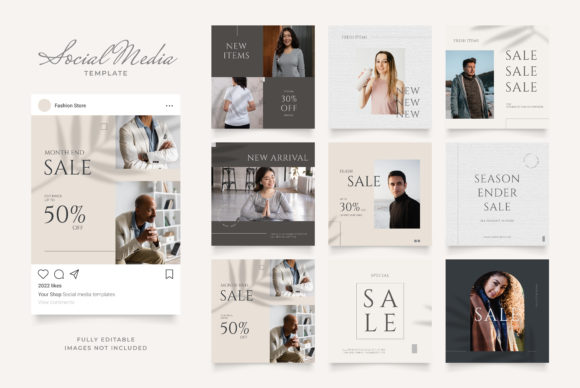
The preview images that come with the template are not included in the final file, which is standard practice. You replace them with your own photos. This is actually an advantage, because it forces your content to be original. Your feed will not look like someone else's template demo. It will look like your brand, using your imagery, with a structure that has been professionally designed.
Why Customization Matters More Than Ever
In a crowded social media environment, personalization is a key differentiator. Audiences can spot generic content quickly. A template that is used exactly as downloaded, without any adjustments, may not help you stand out. But a template used as a starting point—with your own images, your own voice in the text, and small tweaks to colors or fonts—becomes uniquely yours. The Biscacha template is designed to encourage this kind of adaptation. Its fully customizable nature means you are not forced into rigid choices. You can swap fonts from the included free set, adjust the layout to fit your image orientation, and use the vector elements to create variations over time.
This approach aligns with current best practices in social media marketing. Consistency does not mean identical. It means recognizable. Your audience should be able to identify your content within a split second of seeing it in their feed. The template helps establish that visual consistency, while your edits and content choices ensure it stays personal.
For businesses looking to advertise products, the banner functionality of the template is especially useful. A single design can be adapted for Instagram, Facebook, LinkedIn, or even printed materials. The vector format ensures that whether you are publishing on a mobile screen or printing a banner for an event, the quality remains high. This reduces the need to create separate assets for each channel.
Getting Started Without Overthinking
If you are considering using a template like this, the most important step is simply to start. Open the EPS file in Illustrator. Explore the different design options included. Pick one that aligns with the tone of your content—clean and minimal, bold and colorful, or something in between. Then follow the workflow step by step. The first few attempts may take longer, but you will quickly develop a rhythm.
It is also helpful to plan a small batch of posts in advance. Set aside an hour to create three to five designs using the template. This gives you a buffer of content that you can schedule over the coming days or weeks. You will immediately notice how much easier it becomes to maintain a consistent posting schedule when the design work is already done.
The Biscacha Social Media Template is not a magic solution. No template is. What it offers is a reliable, professional structure that removes the guesswork from layout and composition. The rest depends on your content—your images, your captions, and the value you provide to your audience. But with a strong visual foundation, those elements have a much better chance of being noticed.
A Realistic Perspective on Investment
High-priced design services remain out of reach for many individuals and small teams. Yet the expectation for polished social media visuals continues to rise. Templates represent a middle ground: they are more affordable than custom design work, but they require some effort and skill from the user. The Biscacha template fits squarely in this space. It is a professional tool designed for a capable user who wants control without the cost.
If you already have basic Adobe Illustrator skills, or you are willing to learn them, this template can serve you for months or even years. Because it is resizable and vector-based, it will not become obsolete as platform specifications change. You can adapt it to new formats as they emerge. The 100 free fonts included give you room to refresh your look without searching for new typefaces.
Ultimately, the question is not whether you can afford a high-priced design service. It is whether you can afford to let your social media presence remain inconsistent, unpolished, or time-consuming to produce. For many professionals, creators, and business owners, a template like this is not a compromise. It is a smart investment in efficiency and brand quality.